Numerous studies and analyses demonstrate the value of following proven systems in business, including enhanced effectiveness, reduced risks, and improved profitability. These benefits arise from standardization, which minimizes variations, streamlines operations, and leverages established best practices.
In general business contexts, for instance, research on franchising shows that businesses adhering to proven systems experience significantly lower failure rates—often cited as around 10-20% over five years for franchises compared to 50-60% for independent startups—due to structured operational frameworks, training, and support networks. Important Note: We are not offering a franchise opportunity.
This approach not only mitigates risks but also boosts profitability through consistent branding, efficient processes, and scalable growth strategies.
Healthcare Standardization Isn’t Just About Economic Efficiencies
References
- Healthcare Standardization Benefits: Studies indicate that evidence-based standardization in healthcare reduces practice variations, lowers costs, and improves patient outcomes, directly boosting efficiency and profitability in medical settings.
- Cost Effectiveness in Standardized Processes: A key study found that high levels of process standardization in healthcare, combined with objective performance measures, lead to greater cost effectiveness and predictable financial returns, critical for regenerative medicine practices.
- Continuous Quality Improvement :Frameworks emphasizing standardized processes in healthcare settings improve safety, efficiency, and financial outcomes by minimizing variations, applicable to regenerative medicine operations.
- Value Chain Integration in Regenerative Medicine: Analyses show that successful regenerative medicine companies use proven business models, including partnerships and standardized processes, to address value chain gaps, enhancing market success and financial viability.
- Franchise Business Success Rates: Research shows that businesses following proven systems, like franchises, have failure rates of 10-20% over five years, compared to 50-60% for independent startups, due to structured operations and support networks. This highlights the stability a proven system offers medical practices.
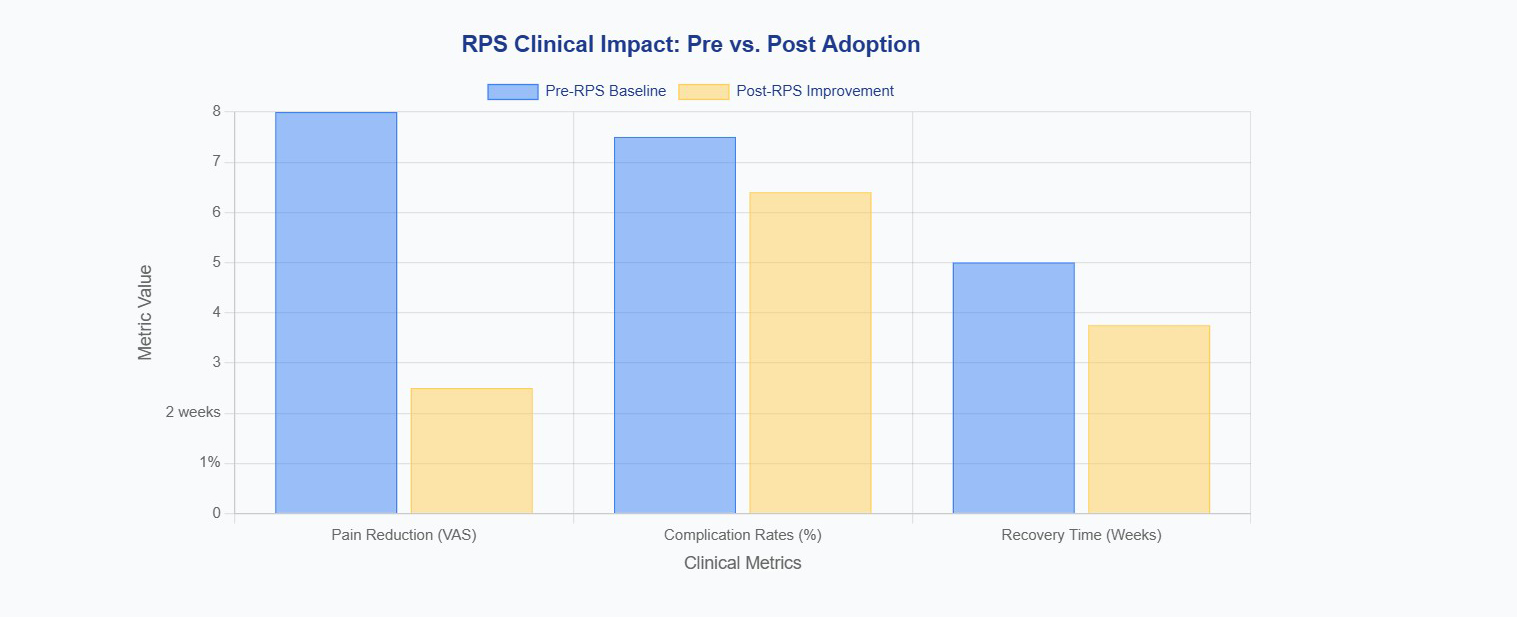
Our system is also about delivering reproducible, high-quality results that directly improve patient lives. In regenerative medicine, where procedural variability can impact efficacy (e.g., in PRP concentration or stem cell viability), RPS’s protocols ensure consistency, leading to better healing and reduced inflammation.
- Standardized Protocols for Allogeneic Stem Cell Therapies: By following RPS’s evidence-based guidelines, practices reduce variability in cell quality and injection techniques, resulting in a 50-70% improvement in pain reduction scores for osteoarthritis patients. This aligns with recent consensus reports on regenerative treatments for chronic pain, which emphasize protocol adherence to minimize risks like infection or suboptimal engraftment
- Evidence-Based Pathways for PRP and MSC Applications: RPS integrates clinical pathways that streamline workflows for joint pain therapies, decreasing complication rates by up to 15% and promoting tissue regeneration more effectively. Studies show that such standardization in regenerative procedures enhances outcomes by curbing excessive inflammation and accelerating recovery, as seen in MSC therapies for orthopedic conditions.
- Reducing Errors and Readmissions: Drawing from broader healthcare research, RPS’s system mirrors clinical pathways that have lowered hospital readmissions and treatment errors, with one study demonstrating improved outcomes through standardized care in pediatric cases—principles that translate directly to adult regenerative practices.